
$119.99Original price was: $119.99.$74.99Current price is: $74.99. Select options This product has multiple variants. The options may be chosen on the product page- $34.99 – $36.99Price range: $34.99 through $36.99 Select options This product has multiple variants. The options may be chosen on the product page
Taking your dog for a walk after sunset can be part of a normal daily routine. But when the streets become dark, it gets harder to see your dog, notice obstacles, and make sure other people can spot you both. A suitable dog collar light can help make evening walks easier to manage, but not every type of light serves the same purpose.
Some products illuminate the entire collar, while others clip onto an existing collar or harness. Reflective accessories work differently because they need an outside light source. There are also decorative projectors that create patterns on the ground rather than acting as visibility lights. This guide compares the main types of dog collar lights, explains what to look for before buying, and helps you choose accessories that match your dog’s walking routine.
Why Should You Use a Dog Collar Light for Night Walks?
A dog collar light helps make your pet easier to notice in low-light conditions. It can help owners keep track of a dog on a dim path and make the dog more noticeable to people nearby. However, a collar light is only one part of a responsible nighttime walking setup.
Low Light Makes Dogs Harder to See
Dogs can be difficult to notice after dark, especially when their coat is black, brown, or another dark color. A dog walking near a road may blend into shadows, parked cars, bushes, or an unlit sidewalk. Even familiar routes can look different at night.
A light attached to the collar, harness, or leash adds a visible point that can help distinguish your dog from the surrounding environment. It can also make it easier for you to follow your dog’s position when walking in a park or along a quiet path.
Different Lights Solve Different Problems
Not every dog collar light works in the same way. An LED collar produces its own light, while reflective material returns light from an external source such as vehicle headlights. A decorative projector creates a pattern on the ground and is designed mainly for visual effect.
Understanding this difference matters. If your main goal is visibility near traffic, choose equipment designed for that purpose. If you want a creative accessory for photos or relaxed evening walks, a decorative light may be a fun addition, but it should not replace safety equipment.
What Types of Dog Collar Lights Are Available?
The main options include full LED collars, clip-on lights, illuminated collar covers, and reflective collars. Each has different strengths, and the right choice depends on your dog’s size, collar setup, walking environment, and how much visibility you need.
1. Full LED Dog Collars
A full LED dog collar has lights built into the collar itself. When switched on, the collar becomes illuminated around some or most of its length, depending on the design. This can create a more continuous light source than a small single clip-on device.
Full LED collars may be useful for dogs that regularly walk in low-light areas. Some designs offer steady and flashing modes, adjustable lengths, or rechargeable power. These features vary by model, so check the manufacturer’s specifications rather than assuming every LED collar has the same options.
One practical point is that a full LED collar may replace your dog’s usual collar during a walk. If your regular collar carries an identification tag, make sure the alternative arrangement still keeps your dog’s ID information available.
2. Clip-On Dog Collar Lights
A clip-on dog light is a small accessory that attaches to an existing collar, harness, or leash. It is a convenient option if you do not want to replace your dog’s everyday collar. You can also move a compatible clip-on light between different pieces of walking gear.
Clip-on lights come in different shapes and lighting styles. Some are simple points of illumination, while others have a larger illuminated body or a decorative design. Their visibility depends on brightness, position, size, and whether the device is hidden by thick fur or other equipment.
Check the clip before buying. It should attach securely without sliding around or creating pressure on the collar. A small light that frequently turns underneath the dog’s neck may be less useful than one positioned where it remains visible.
3. Reflective Dog Collars
A reflective dog collar does not produce its own light. Instead, reflective material returns light toward its source when headlights or a flashlight shine on it. Reflective stitching, strips, or panels can make parts of a dog easier to notice when an outside light hits them.
Reflective gear is lightweight and does not need charging. However, it is less useful when there is no light source directed toward the dog. It is best understood as one part of a visibility setup rather than a substitute for an active light in every environment.
4. Illuminated Collar Covers and Sleeves
An illuminated collar cover or sleeve fits over or around an existing collar, depending on its design. It can add lighting while allowing the dog to keep its normal collar and identification tags.
Before buying, check how the cover attaches and whether it is compatible with the collar’s width and shape. A sleeve that fits poorly may twist, slip, or cover important identification details.
5. Decorative Dog Collar Projectors
A decorative dog collar projector uses light to create a pattern on a nearby surface. Instead of making the collar itself glow, it directs a designed image toward the ground or another surface beside the dog.
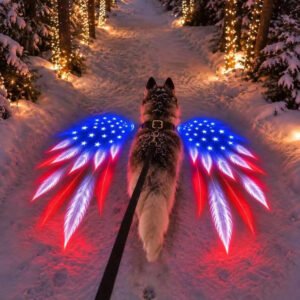
For example, a wing projector can create the appearance of colorful wings on the pavement next to a walking dog. This is a creative styling effect, not the same function as a dedicated visibility light. It is best suited to owners who want a distinctive accessory for relaxed walks, photographs, and fun outdoor moments.
| Accessory Type | How It Works | Best Use | Main Limitation |
|---|---|---|---|
| LED dog collar | Produces light along the collar | Regular low-light walks | May replace the everyday collar |
| Clip-on safety light | Produces light from a small attachment | Adding a light to existing gear | Small light may be hidden |
| Reflective collar | Reflects external light | Supplementary visibility | Needs light to shine on it |
| Illuminated collar cover | Adds light around an existing collar | Keeping the usual collar | Fit depends on collar design |
| Decorative projector | Projects a pattern onto a surface | Creative styling and photos | Not a safety light |
How Do You Choose the Best Dog Collar Light?
The best dog collar light is the one that fits your dog comfortably and suits the conditions in which you walk. Before choosing a product, consider visibility, fit, battery arrangements, durability, ease of use, and the manufacturer’s instructions.
Consider Where You Walk
A dog that walks mainly on well-lit neighborhood sidewalks may have different needs from a dog that regularly walks along dark roads or unlit trails. Think about the places you visit most often, the amount of traffic, and whether there are sidewalks or safe walking paths.
For darker routes, consider a dedicated light combined with reflective equipment. For a short walk around a well-lit block, a smaller light may be a practical addition. No accessory removes the need to stay alert and keep your dog under control.
Check the Light’s Position and Coverage
A light is only useful if it can be seen. Look at where the product sits on the dog and whether long fur, a harness, a leash attachment, or the dog’s body may block it. A small clip-on light positioned under thick neck fur may be harder to notice than a light placed on top of the collar or harness.
Consider whether the product is visible from more than one direction. A light that can only be seen clearly from one angle may not be enough for routes where people and vehicles approach from different directions.
Choose a Comfortable Fit
For a full collar, measure your dog’s neck and compare the result with the manufacturer’s size chart. The collar should fit securely without restricting breathing, movement, or swallowing. Follow the manufacturer’s fitting guidance rather than relying only on broad labels such as small, medium, or large.
For a clip-on light, check the clip opening and the thickness of the collar or harness material. It should stay attached during normal movement without pulling on the fabric or creating a sharp pressure point.
Understand Battery and Charging Requirements
Some dog collar lights use replaceable batteries, while others are rechargeable. Neither arrangement is automatically best for every owner. Rechargeable products need a regular charging routine, while replaceable-battery products require spare batteries and proper battery handling.
Check the stated charging method, charging time, battery type, and operating time for the exact model. Runtime may vary depending on the selected lighting mode and battery condition. Avoid relying on an unverified runtime claim from a different product or seller.
Review Water Resistance and Care Instructions
Dog walking equipment can encounter damp grass, rain, puddles, and muddy paths. However, not every light is designed to handle moisture. Look for a clearly stated water-resistance rating and read what it actually covers.
Water-resistant does not always mean waterproof. A product that can handle light splashes may not be suitable for swimming or submersion. If the manufacturer says the device is not water-resistant, keep it dry and remove it before water activities.
Check Controls and Ease of Use
You may need to switch a light on while holding a leash, waste bags, and other walking items. A simple control button can be easier to manage than a complicated interface. Check whether the button is easy to find and whether the product has clear instructions for changing modes or switching it off.
| Buying Factor | What to Check | Why It Matters |
|---|---|---|
| Visibility | Light output and viewing angles | Affects how easily others can notice the dog |
| Fit | Neck size or clip compatibility | Helps prevent slipping and discomfort |
| Power | Battery type and charging method | Helps plan regular use |
| Durability | Materials and care guidance | Helps match the product to your routine |
| Water protection | Published rating and limitations | Prevents unsuitable use in wet conditions |
| Controls | Button location and operating modes | Makes the light easier to use during walks |
Frequently Asked Questions About Dog Collar Lights
1. What Is the Best Type of Dog Collar Light for Night Walks?
The best type depends on your walking environment and your dog’s needs. A full LED collar provides light along the collar, while a clip-on light can be added to existing gear. Reflective accessories provide another layer of visibility when an outside light reaches them. For many routes, combining active lighting and reflective gear is worth considering.
2. Are LED Dog Collars Better Than Reflective Collars?
They work differently. LED collars produce their own light, while reflective collars return light from headlights or another external source. An LED collar may be useful in areas without much outside lighting, while reflective gear can add visibility when illuminated by vehicles or flashlights.
3. Can I Put a Clip-On Light on My Dog’s Existing Collar?
Many clip-on lights are designed for existing collars, but compatibility depends on the clip opening and collar thickness. Check the product’s instructions and make sure the light attaches securely without slipping or causing discomfort.
4. Should a Dog Wear a Light-Up Collar Every Night?
It depends on the dog’s routine, the product, and the walking conditions. If you regularly walk after dark, a suitable visibility light may be useful. Follow the manufacturer’s instructions, check the device before use, and remove it if it causes irritation or discomfort.
5. Are Dog Collar Lights Waterproof?
Not all dog collar lights are waterproof or water-resistant. Check the exact product’s stated rating and care instructions. Water-resistant products may still have limits, and a product that is not water-resistant should be kept away from rain, splashes, and water activities.
6. Do Flashing Dog Collar Lights Work Better Than Steady Lights?
Flashing and steady modes have different visual effects. A flashing light may attract attention, while a steady light can provide a more consistent point of illumination. Choose according to the product instructions, your surroundings, and your dog’s comfort. Avoid assuming that one mode is best in every situation.
7. Can a Dog Collar Projector Replace an LED Safety Light?
No. A decorative projector creates an image on the ground and is not designed to replace a dedicated visibility light. PawWings is intended for decorative wing projections. Use appropriate reflective equipment or a purpose-made visibility light for nighttime walking.
8. How Do I Choose the Right Size LED Dog Collar?
Measure your dog’s neck with a soft measuring tape and compare the result with the manufacturer’s size chart. Follow the brand’s fitting instructions and check that the collar is secure without being too tight. Do not choose a size based only on your dog’s weight or breed.
9. Can I Use a Dog Collar Light on a Harness?
Some clip-on lights can attach to a harness, but not every product is designed for every harness. Check the clip size, attachment position, and manufacturer’s guidance. Make sure the light does not interfere with the harness straps or your dog’s movement.
10. What Else Should I Use for Nighttime Dog Walks?
Consider a reflective leash or harness, a suitable visibility light, a flashlight or headlamp for yourself, current ID tags, and a secure leash. Choose familiar routes with sidewalks or good lighting where possible, and remain aware of traffic and other hazards.
Conclusion: Choose Dog Collar Lights That Match Your Walking Routine
The right dog collar light depends on how and where you walk your dog. Full LED collars provide illumination along the collar, clip-on lights add a flexible light source to existing gear, and reflective accessories return light from headlights or flashlights. Each option has its own strengths and limitations.
Before buying, check fit, visibility, power requirements, water protection, and ease of use. For walks after dark, combine suitable equipment with a leash, reflective details, a light for yourself, and a route that allows you to stay aware of your surroundings. No single accessory can replace responsible walking habits.
If you want a more creative accessory for relaxed evening walks and pet photography, PawWings offers a different kind of light: a clip-on LED projector that displays colorful wing patterns on the ground beside your dog. It is not a safety light, but it can add a memorable visual touch to your dog’s look.
Give Paws Wings.
For evening walks, match the light to your surroundings and visibility needs. A steady collar light, reflective leash, and owner carried flashlight do different jobs. Check fit and instructions before heading out, and use a decorative projector only as an extra visual touch.