
$119.99Original price was: $119.99.$74.99Current price is: $74.99. Select options This product has multiple variants. The options may be chosen on the product page- $34.99 – $36.99Price range: $34.99 through $36.99 Select options This product has multiple variants. The options may be chosen on the product page
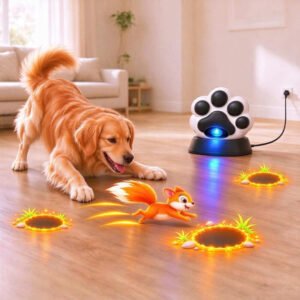
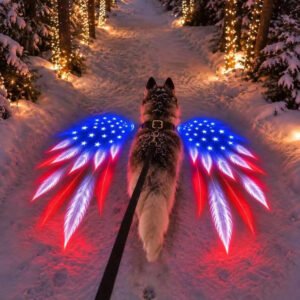
A dog collar projector is a small lighting accessory that projects a decorative image or pattern onto the ground near a dog as the dog moves. Unlike a traditional LED dog collar that makes the collar itself glow, a projector creates a separate visual effect around the pet. Depending on its design, the projected image might look like wings, colorful shapes, or other playful patterns.
So, how does a dog collar projector work? The basic idea is simple: a compact light source shines through an optical component that shapes the light into a recognizable pattern. The projector is attached to a suitable dog collar and positioned so that the image appears on the ground beside the dog. In a product such as PawWings, the projected pattern resembles a pair of glowing wings, creating the playful impression that the dog has grown wings while walking.
Dog collar projectors are primarily decorative accessories. Their appearance depends on factors such as ambient light, projection angle, distance, and ground surface. They are not a replacement for reflective gear or dedicated safety lights when walking near traffic.
What Is a Dog Collar Projector?
A dog collar projector is a compact accessory designed to create a visible light pattern near a dog rather than simply illuminating the collar. It usually attaches to an existing collar or another compatible mounting point.
The key difference is where the light appears. A regular LED collar makes the collar, strap, or surrounding material glow. A collar projector directs light outward and creates a separate image on a nearby surface.
How Is It Different from a Regular LED Dog Collar?
Although both products use LED lighting, they serve different visual purposes.
| Feature | LED Dog Collar | Dog Collar Projector |
|---|---|---|
| Main effect | The collar itself lights up | A pattern appears on a nearby surface |
| Where the light appears | On or around the collar | On the ground or another surface |
| Visual purpose | Illuminated collar appearance | Decorative projected images |
| Typical design | Light strips or illuminated collar material | Compact light with an optical pattern |
| What affects visibility? | Light output, distance, and ambient conditions | Light output, focus, projection angle, surface, and ambient conditions |
Neither category automatically guarantees that a dog will be easy for drivers to see. A decorative projection should not be treated as a substitute for equipment designed specifically for nighttime visibility.
What Can a Dog Collar Projector Display?
The projected design depends on the product’s optical pattern. Some projectors are designed to create simple shapes, while others use recognizable decorative images.
For example, a wing projector can create the appearance of wings on the ground beside a walking dog. The image moves in relation to the dog’s position, making the effect look more dynamic than a stationary decoration.
This is the idea behind PawWings. Its small LED projector attaches to a suitable existing dog collar and projects colorful wing patterns onto the ground. The dog does not wear physical wings. Instead, the projected image creates the illusion of wings appearing beside the dog.
How Does a Dog Collar Projector Work?
A dog collar projector works by directing light through an optical system that shapes it into a particular image. The projector’s light source produces the illumination, while the optical components help form the pattern that appears on a nearby surface.
Although the exact construction varies by product, the general process can be understood in four stages.
1. The Light Source Produces Light
The first part is the light source. Many compact decorative projectors use LEDs because they can produce light in a relatively small package.
When the projector is switched on, the light source illuminates the optical pattern inside the device. The light needs to be directed toward an appropriate surface for the image to become visible.
The light source alone does not create a recognizable wing or decorative shape. That visual design comes from the optical components that shape the light.
2. The Optical Element Shapes the Pattern
The optical element is what gives a projector its distinctive appearance. Depending on the design, it may use a patterned element, lens, aperture, or a combination of components to shape the light.
Think of shining a flashlight through a cutout. The flashlight provides the light, but the cutout changes the shape that appears on the wall. A compact projector uses a similar general principle, although its optical design can be more specialized.
In a wing projector, the optical pattern is designed to produce a wing-shaped image rather than a simple circle of light.
3. The Projector Directs the Image onto a Surface
Once the light has been shaped, the projector directs it outward. The image becomes visible when the light reaches a suitable nearby surface, such as pavement, a sidewalk, or a relatively flat floor.
This is why a dog collar projector needs to be positioned correctly. If it points too far upward, too far downward, or toward an unsuitable surface, the projected design may become difficult to see.
4. The Image Appears Beside the Moving Dog
When the projector is attached to a dog’s collar, the light source moves with the dog. The projected image therefore changes position as the dog walks, turns, or changes direction.
With a wing-shaped projection, this movement can create a playful visual effect. The wings appear beside the dog rather than being attached to its body.
The effect is especially noticeable when the projected image is visible on a suitable surface in a relatively dark environment.
Where Does a Dog Collar Projector Display Its Image?
A dog collar projector generally displays its image on a nearby surface in the direction the projector is pointing. For a ground-projection accessory, this usually means the pavement or floor beside the dog.
The image is not printed onto the dog’s fur, attached to its body, or physically worn like a costume. It is a light pattern that appears on a surface.
Projection on Sidewalks and Pavements
Sidewalks and paved paths can provide useful projection surfaces because they are often relatively flat. A light-colored pavement may make a decorative pattern easier to notice than a very dark surface.
However, not all pavements are equally suitable. Rough textures, cracks, uneven stones, and strong surface markings can affect how clearly the image appears.
Projection on Grass
Grass can create a more challenging projection surface. Individual blades, uneven ground, and changes in height may break up the image.
A projection might still be visible, but its outline may look less consistent than it does on a smooth path.
Projection on Indoor Floors
A dog collar projector can also create a decorative effect indoors when the surrounding conditions are suitable. A relatively smooth floor may help display the image, especially in a room with subdued lighting.
Keep in mind that furniture, rugs, steps, and other obstacles can interrupt the projected pattern. The dog should always have enough space to move comfortably.
Does the Projected Image Stay in One Place?
No. When the projector moves with the dog, the projected image changes position as the dog moves.
It is helpful to think of the projector as a small moving light source rather than a fixed decoration on the ground. The image’s position and appearance depend on the dog’s movement, the mounting angle, and the surface receiving the light.
Why Does a Dog Collar Projector Look Better at Night?
A dog collar projector is generally easier to see in low-light conditions because there is less surrounding light competing with the projected image.
This does not mean that every projector becomes completely invisible during the day or equally bright in every nighttime environment. Visibility depends on the projector itself and the conditions around it.
Ambient Light Makes a Difference
Ambient light is the light already present in the environment. Direct sunlight, bright streetlights, illuminated shop windows, and strong outdoor lighting can make a decorative projection less noticeable.
In a darker environment, the projected pattern may stand out more clearly because the surrounding surface is not already brightly illuminated.
Daytime Projection
During the day, sunlight can overpower a small decorative projection. Even if the projector is operating, the image may look faint or difficult to distinguish.
For this reason, a dog collar projector designed for decorative effects is usually better suited to evening walks, indoor play, or other low-light settings.
Nighttime Projection
At night, the projected pattern may become easier to notice, particularly when the ground is relatively light and smooth.
However, a dark environment does not automatically guarantee a sharp image. The projection angle, distance, ground texture, and condition of the projector still matter.
Does a Brighter Environment Always Mean a Better Projection?
No. A bright environment can make the projected image harder to distinguish. The goal is not simply to use the projector in a well-lit area, but to find a suitable balance between enough surrounding light for comfortable movement and low enough ambient light for the decorative pattern to remain visible.
For nighttime walks, continue using appropriate visibility equipment. A decorative projected image is not designed to illuminate the path or reliably alert approaching drivers to a dog’s presence.
What Affects the Quality of a Dog Collar Projection?
The appearance of a projected image depends on more than the light source. Several environmental and installation factors influence whether the pattern looks clear, recognizable, and properly positioned.
1. Ground Color
Light-colored surfaces often provide better contrast for decorative projections. A dark surface may absorb more of the visible light or make the pattern less distinct.
If the image looks faint, try observing it on a lighter section of pavement or flooring.
2. Ground Texture
A smooth surface generally helps preserve the shape of a projected image. Rough concrete, loose gravel, grass, and uneven paving can distort or interrupt the pattern.
3. Projection Angle
The angle of the projector determines where the image lands. A poorly positioned projector may direct the pattern too close to the dog, too far away, or toward an area that is not suitable for viewing.
Small adjustments to the mounting position may change the result. Always follow the product’s installation instructions and make sure the projector is securely attached.
4. Projection Distance
The distance between the projector and the surface can affect the apparent size and definition of the image. Depending on the optical design, a pattern may become larger or less defined as the projection distance changes.
There is no single ideal distance for every dog collar projector. Follow the manufacturer’s instructions instead of assuming that all models use the same projection range.
5. Movement
A dog that walks, turns, or changes direction naturally changes the projector’s position. This is part of the visual appeal of a moving projection, but it can also make the image shift across different surfaces.
For photos or videos, a relatively open area with a consistent surface can make the effect easier to capture.
Frequently Asked Questions About Dog Collar Projectors
1. What Does a Dog Collar Projector Do?
A dog collar projector creates a decorative light pattern on a nearby surface, usually the ground beside the dog. Unlike a regular LED collar, which illuminates the collar itself, a projector creates a separate visual effect.
2. How Does a Dog Collar Projector Create an Image?
It uses a light source and optical components to shape the light into a particular pattern. The projector directs that pattern onto a nearby surface, where it becomes visible.
3. Where Does a Dog Collar Projector Display the Light?
It displays the image on the surface toward which it is aimed. For ground-projection products, this is usually the pavement or floor beside the dog.
4. Can You See a Dog Collar Projector During the Day?
The image may be difficult to see in bright daylight because sunlight competes with the projected light. Decorative projections are generally easier to notice in low-light environments.
5. Does the Projected Image Move When the Dog Walks?
Yes. When the projector is attached to the dog’s collar, it moves with the dog. The projected image therefore changes position as the dog walks or turns.
6. Can a Dog Collar Projector Fit Any Dog Collar?
Not necessarily. Compatibility depends on the attachment design and the collar’s width, thickness, and structure. Check the product’s specifications before purchasing.
7. Is a Dog Collar Projector the Same as an LED Dog Collar?
No. An LED dog collar makes the collar itself glow, while a dog collar projector creates an image on a nearby surface. They use lighting for different visual effects.
8. Can a Dog Collar Projector Replace a Safety Light?
No. A decorative projector is not a dedicated safety light. Use suitable reflective equipment or visibility lights when walking in low-light areas, especially near traffic.
9. Can I Use a Dog Collar Projector in the Rain?
That depends on the product’s weather-resistance rating. Never assume that a projector is waterproof. Check its specifications and follow the manufacturer’s instructions. PawWings is not water resistant; keep it dry and follow the product care instructions.
10. Does PawWings Project Physical Wings onto a Dog?
No. PawWings uses a small LED projector attached to a suitable existing collar to display colorful wing patterns on the ground beside the dog. The wings are projected images, not physical accessories worn by the dog.
11. Does PawWings Include a Dog Collar?
No. The PawWings package does not include a dog collar or leash. The projector is designed to attach to a suitable existing collar.
12. Is PawWings Designed for Nighttime Safety?
PawWings is a decorative projection accessory. It is not a dedicated safety light and should not replace reflective gear, a suitable visibility light, or responsible nighttime walking practices.
Final Thoughts: A Different Kind of Dog Collar Light
A dog collar projector works differently from a traditional LED dog collar. Instead of making the collar glow, it uses shaped light to create a decorative pattern on a nearby surface.
Its appearance depends on several factors, including ambient light, ground color, surface texture, projection angle, and mounting position. For the clearest effect, use the projector in an appropriate low-light environment with a suitable surface.
If you are looking for a decorative accessory that adds something unusual to your dog’s appearance, PawWings offers a playful alternative to traditional dog lighting accessories. Its compact LED projector creates colorful wing patterns on the ground beside your dog, bringing a little extra magic to evening walks and pet photography.
Want to give your dog a pair of projected wings? Explore the available designs at PawWings and discover a different way to make your dog’s next walk more memorable.
For a projected pattern, placement and surrounding light matter most. Test the attachment on the collar before going outside, then check that the colorful wing image falls beside the dog. Treat it as a playful visual effect and keep a separate visibility light for practical night walking.